Classical scholar Nadya Williams has a bold thesis.
The Classics – a collection of works written by mostly pagan Greco-Roman writers between 800 BC and 200 AD – can help us make sense of the Biblical Gospels.
“The Classics will help you get the same things from Christ in (at times) a better or clearer way,” she said, speaking on Undeceptions.
The Classics certainly don’t come easily to us modern readers.
They include a range of works across different genres: from the Epics (like Homer’s The Odyssey), to history (Tacitus, Herodotus), philosophy (Plato, Aristotle), rhetoric (Cicero), and even biography (Suetonius).
Nadya reckons everyone should read a Classic – nothing surprising there, given her profession – but she believes people will get more from them, especially if they’re either Christians or curious sceptics.
After all, the ancient Christians loved the Classics.
“If you read any of the church fathers (e.g. Athanasius, Cyprian, Polycarp, ect), you will see that they’ve been immersed in the pagan Classics, and they’re using them to make arguments about Christ,” Nadya said.
“I think the Christian writers really saw a power in these works, and a longing for God, and they were able to bring them together and say, ‘This is powerful, this is beautiful, and this is fulfilled in Christ’.
“So, to use the example of Virgil’s Aeneid, it becomes incredibly popular with Christians precisely because they can see longings that some start interpreting as allegorical. There’s a reason Virgil becomes the guide in Dante’s Inferno (in the 13th century).”
Nadya’s idea of the Classic-loving believers cuts against the popular (and somewhat modern) notion of ancient Christians trying to do away with pagan texts in late antiquity and the Middle Ages. Indeed, modern efforts to rehabilitate the tastes of the ancient Christians have been met by return fire.
But regardless of how some Christians might have felt about the Classics, what’s irrefutable is that it was the church that preserved them throughout history.
This is a point made by Historian Peter Brown, who noted that the only reason we have a lot of the Classics nowadays is due to Christian preservation.

An artist’s impression of the Imperial Library of Constantinople, which housed thousands of pagan texts. The library was destroyed in the Fourth Crusade of 1202-1204
Nadya doesn’t deny that there was a decline of Classical literature pre-Renaissance (the period from roughly 1300 – 1600 that saw the rediscovery of Classical literature in the West). But she puts this down to the rather boring factor of the passage of time.
“The reason much Greek and Roman literature has been lost is not due to some kind of Christian conspiracy. Rather, the ravages of time have led to the discarding of many texts that just weren’t valued highly enough to be preserved, as with many contemporary books that will surely be forgotten within a generation, if not sooner,” she wrote on her Substack.
When one steps back, it makes a lot of sense why Christians would love the Classics; a lot of the authors were musuing about big, cosmological ideas, such as what it meant to live well, and in harmony with the divine. It was into this literary culture that the Gospels themselves arrived.
The Greek and Roman worlds didn’t disappear; they morphed,” John Dickson said.
“The greatest thinkers of the early Christian centuries wrote in the same languages — Greek and Latin — wrestled with the same universal questions, but offered strikingly different answers. Ancient poets longed for immortality through fame, philosophers searched for virtue, historians tried to preserve meaning by memory … the pressing question was how to align one’s life with that order, here and now … and even beyond this mortal span.
“Meaning, ethics, eternal life, and, above all, divine favour … over time, the classical world came to embrace the Christian vision of the Good and the good life — not through force, as people sometimes imagine, but through the realisation that the great odyssey of the classics — that search for substance, glory, ethics, and even the favour of the gods — finally found its homecoming not in Achilles, Aeneas, Plato, or Caesar, but in Jesus Christ.”

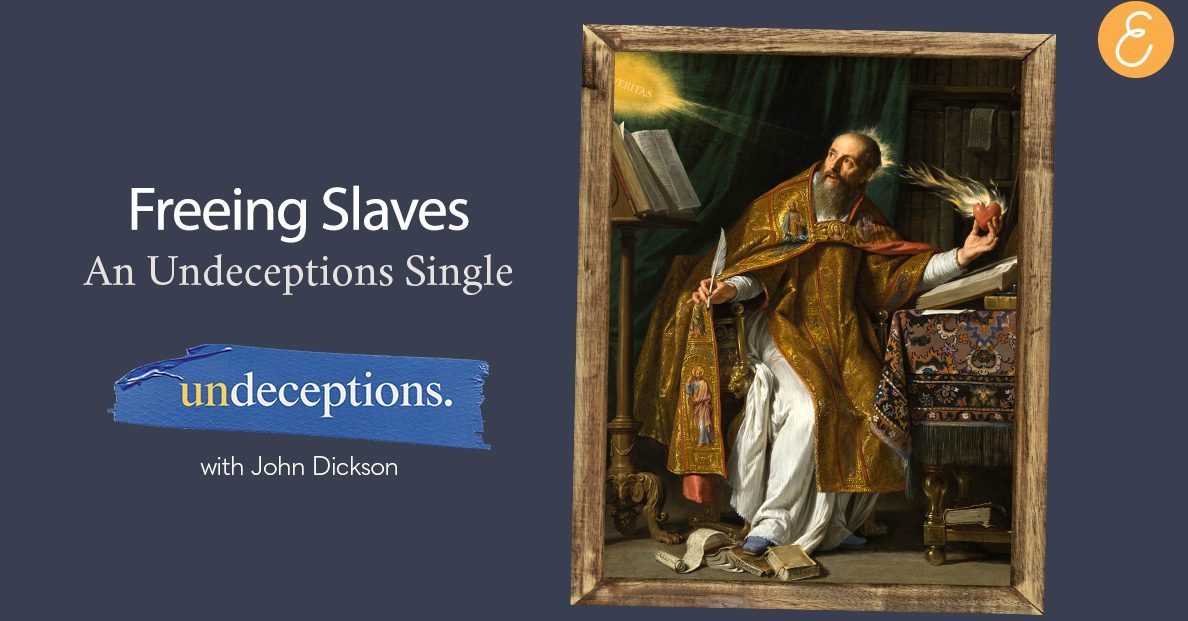
Saint Augustine – hard at work on a future Classic.
The classical world became the Christian world, in large part because of the Gospel’s answers to the questions posed by the Classics.
But perhaps surprisingly, Nadya believes Christians today can benefit from reading these texts.
“I think about how the earliest converts encountered the Gospels, and where they were coming from. They were coming from a world of pagan literature. If that is all you’ve ever read, and then you pick up the Gospels for the first time, what is it gonna be like?
“I think the Gospel spoke to these people in a really powerful way, precisely because they had been immersed in Greco-Roman literature. The contrast with a world of cruel gods gave them something that really stood out.
“Most people today who come to Christ, if they didn’t grow up in a Christian home, they’re not coming from paganism. They’re coming a lot of times from nothing … (and) for people like that, I would say reading the Classics will help you see the wonder, the beauty, the incredible power of God’s presence in your life.”
Adapted by Alasdair Belling from Undeceptions episode 172, ‘ Reading Classics’. You can listen to the full episode here.


Want to be further undeceived?
Check out our network of podcasts and articles in the Undeceptions Library.