Although he is the pantomime villain of the Nativity story, King Herod the Great was a very real, very dangerous man.
Of course, when it comes to Bible characters, talking about ‘Herod’ can be confusing.
That’s because the Bible talks of five different Herods: Herod the Great, his sons Herod Archelaus and Herod Antipas, and his grandson and great-grandson Herod Agrippa I and Herod Agrippa II.
But there was only one Herod the Great—the man who ruled Judea as a client King in the Romans’ employ between 37 and 4 BC.
So, who was Herod the Great, and why does he matter to the Biblical story?
Judea: The most wanted land of the first century
Judea – the region of what is now southern Israel – was unstable in the first century AD, even by Middle Eastern standards!
In the centuries before Jesus’ birth, it had been ruled by the Greeks, then the Ptolemies (also Greeks, but from Egypt), and then the Seleucid Empire (also Greeks, but from what we now call Lebanon/Syria).
Then, in 167 BC, the Maccabees – a group of Jewish rebels led by Judas Maccabeus – overthrew the Seleucids. The festival of Hannukah commemorates this ‘Maccabean Revolt’.
A mere century later, though, Judea was again under the rule of a foreign power: Rome.
Judea was a hugely strategic military and economic position for the Romans.
It also acted as a buffer zone against their eastern enemies.
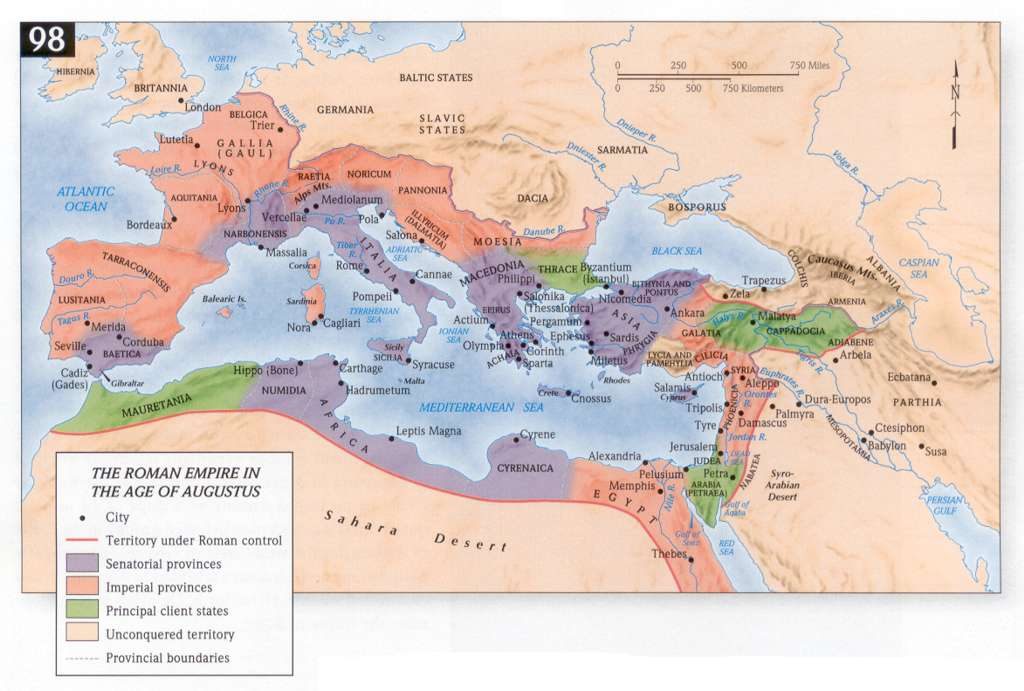
The Roman Empire at the time of Jesus’ birth
The Judean population lived under foreign occupation – and a repressive puppet ruler, which meant that by the time Jesus was born, Judea was a tinderbox waiting to explode.
Herod the Great, hand-picked by the Romans to be king, was very aware of this.
Herod’s great influence
Herod’s unpredictably violent streak stemmed, in part, from his paranoia surrounding his place as king of a Semitic population.
Despite being a “King of the Jews”, Herod was perceived as only Jew-ish.
His father was from Idumea, south of Judea, and converted to Judaism late in life.
Herod’s mother, on the other hand, was Arabian.
Herod was a big fan of Rome, Roman taxes, and as a result, he was pretty unpopular.
But he certainly left his mark which can still be seen today.
He launched wonderful infrastructure projects, including fantastic renovations of the Temple, and built some vast fortresses, including the Antonia Fortress and the famous Masada complex.

Herod’s hilltop fortress of Masada, overlooking the Dead Sea in southeastern Israel
Herod was also famously paranoid; famously, he had his second wife, Mariamne, and their two sons, Alexander and Aristobulus, executed out of fear of his powerful in-laws, the Hasmoneans.
He also had Mariamne’s brother, mother, and grandfather killed, just for good measure.
Just five days before his death, he also had his son Antipater executed, leading then Emperor Augustus to famously quip that “It is better to be Herod’s pig than son” (although sadly, historians aren’t convinced that quote from Augustus is real).
It was this paranoia that, according to Matthew’s Gospel, led Herod to commit one of the most infamous crimes of recorded history: the Massacre of the Innocents.
The nightmare before Christmas
In Matthew, we read that Herod freaked out when three mysterious Magi told him from the East of a new king born in Bethlehem.
He then gave orders to his soldiers to “… kill all the boys in Bethlehem and its vicinity who were two years old and under, in accordance with the time he had learned from the Magi” (Matthew 2:16).
This terrible event led the Holy Family- Joseph, Mary, and the baby Jesus – to flee to Egypt, where they lived as refugees until the danger subsided.
Lots of scholars doubt whether this event actually happened – outside of Matthew, we have no evidence of it.
But, dreadfully, it was by no means out of character for Herod.
Joan Taylor, Professor Emerita of Christian Origins and Second Temple Judaism at King’s College, London, tells of a separate terrible event, right around the same time, where Herod had over forty people, mostly young students, burned alive for staging a demonstration in the Temple of Jerusalem.
Taylor wrote:
“Here is another massacre of young men by Herod, now at the very time that Matthew records the massacre of the infants in Bethlehem. This is surely another element of social memory that has informed what is told: Herod massacred youth.”
The massacre of the innocents isn’t recorded outside of Matthew, but Bethlehem would likely have been a small town in the first century.
This case of infanticide, while dreadful, might not have even rated a mention by other contemporaries.
Herod was a man known to kill those he felt threatened by – so the massacre of the innocents – sadly – was right on brand for him.
A not-so-great-legacy
Herod the Great’s title belies his true legacy – one of violence and cruelty, inflicted upon a suffering people.
He is thought to have died around 4 BC, but outside of the great historian Josephus’ histories, Herod’s death barely rates a mention in contemporary sources – a likely marker of the disdain people felt toward him.
“He was known in the Greco-Roman world as being mercilessly cruel and something of a tyrant,” Taylor said, speaking on the Undeceptions podcast.
“He killed three of his sons because he was so paranoid about their threat to his rule.
“He changed his will a few times in terms of succession, but he also targeted anyone in his kingdom who was in any way.”
Adapted by Alasdair Belling from Undeceptions episode 154 ‘Boy Jesus’. Listen here.


Want to be further undeceived?
Check out our network of podcasts and articles in the Undeceptions Library.